
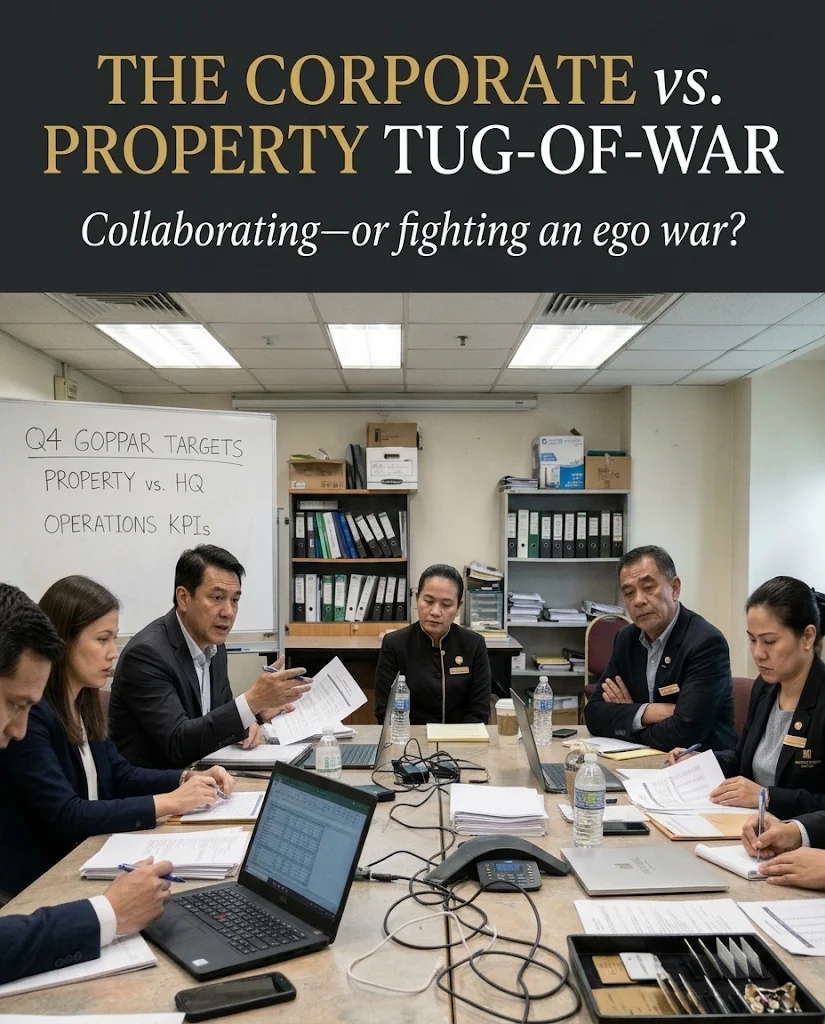
The biggest threat to a hotel’s P&L isn’t the market. It is the ego war between the property and the corporate office
Independent hotels run on a short, all-inclusive chain of command. But in hotel groups, strategy sits at the top and execution fights in the trenches.
Mega-brands can often afford to leave properties to fend for themselves, surviving solely on the gravity of their loyalty and distribution engines. But in mid-sized and regional groups, the operation demands intense integration, brand alignment, and daily hustle.
Here are 5 critical friction points where this relationship breaks—and what it actually costs the owner:
⚔️ 1. Local Hustle vs. Brand Dilution. Property teams are desperate for short-term revenue hits; corporate protects the long-term identity. When a GM bypasses standards for a quick cash grab, they fracture the asset’s identity. They might win the month, but corporate spends the next year cleaning up the mess.
⚔️ 2. Autonomy vs. Abandonment. Corporate offices often confuse “leaving the GM alone” with empowerment. True autonomy requires providing accessible systems, frameworks, and expertise. Leaving a property to fend entirely for itself isn’t freedom—it is abandonment.
⚔️ 3. Execution vs. Ego. A GM’s job is to navigate local nuances, not to rewrite the brand standard. When local leaders decide they are smarter than the corporate playbook and start overwriting strategies, the guest experience breaks. Local agility means adapting the framework, not destroying it.
⚔️ 4. Leveraging the Machine vs. Fighting It. The best property leaders do not view the corporate office as an obstacle; they view it as an arsenal. They tap into central expertise to outmanoeuvre local competitors. The worst ones isolate themselves, treating corporate support as interference or micromanagement.
⚔️ 5. Constructive Friction vs. Toxic Silos. A healthy corporate-property dynamic requires pushback. Realities on the ground must force corporate standards to evolve. But if both sides are just complaining about each other in private silos, the entire system stagnates.
The winning formula is not blind obedience, nor is it total independence. It is strategic continuity. Corporate teams must build scalable frameworks, and GMs must execute them with local precision.
When both sides synchronise, the brand scales. When they fight, the owner pays the ultimate price for the mismatch.
Where do you see this relationship breaking down the most? Is it harder for corporate to let go of control, or for property teams to trust the framework?
🐾 Follow me for tips on hotel commercial strategy, AI integration, and leadership.

You May Also Like

Digital Marketing Managers are from Venus, and Revenue Managers from Mars
The AI Trap: Why your hotel’s marketing is starting to look exactly like your competitors?