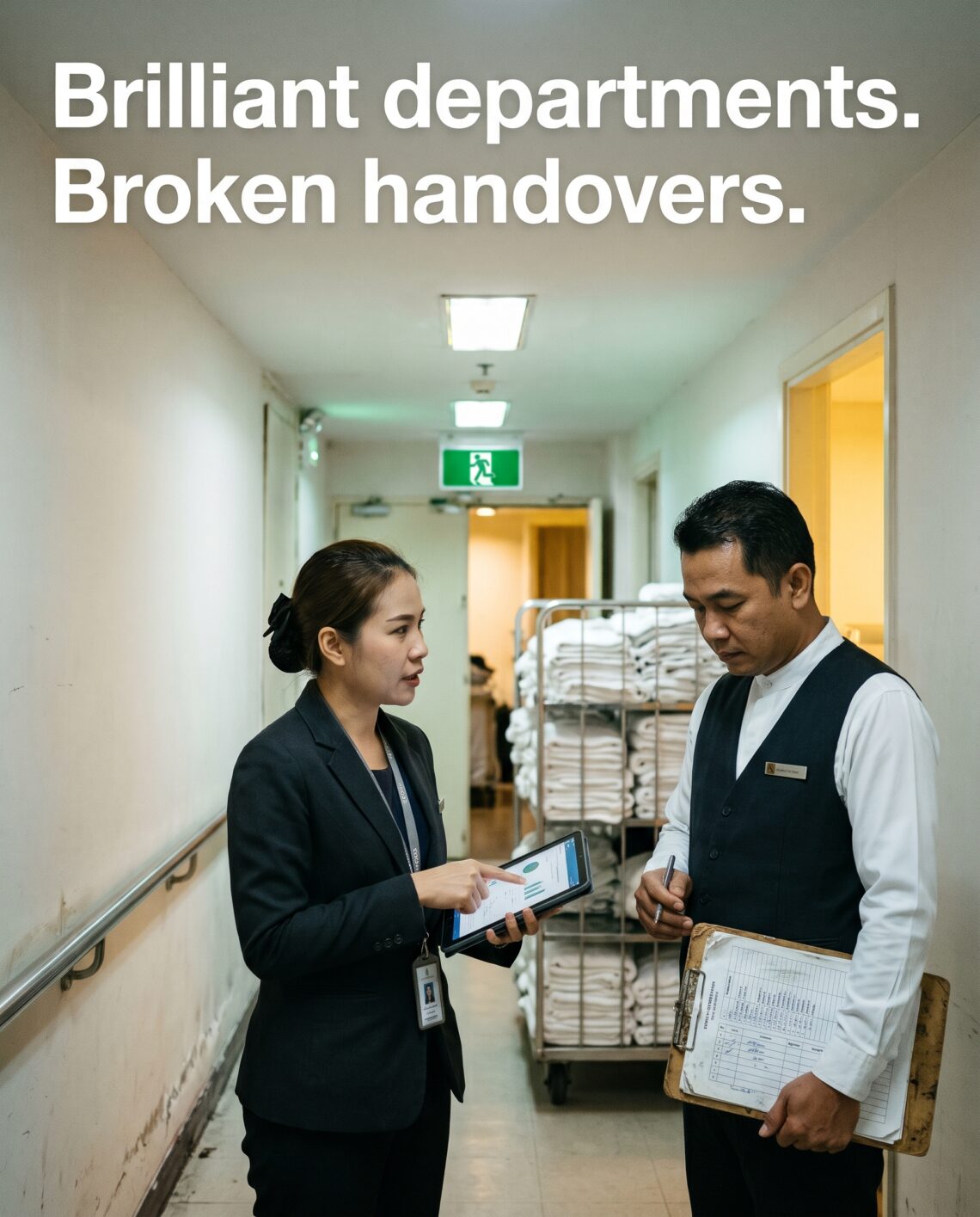
Brilliant Departments, Broken Handovers: Why AI Gains Don’t Reach the Guest
AI can make one department brilliant. Guests only ever experience the whole hotel.
In his new book, Co-Existence, Ethan Mollick uses the idea of the O-ring: a small seal that, if it fails, brings down the whole machine. When work depends on every step, the weakest step sets the outcome.
My own experience suggests that when one team adopts AI well, it gets faster, sharper and better informed. But the gains rarely flow to other departments. The moment work passes to the next team, with its own systems, data and habits, the advantage fades. Every function has good reasons to protect processes that have served it for years. The result is pockets of brilliance, not a better-performing hotel.
We’ve seen this film. The internet and social media promised to democratise distribution. The biggest winners were the players who ran the whole guest journey as one system. The difference this time: AI is arriving inside every system hotels already use, invited or not. Patchy adoption won’t just waste it. It will break things.
Follow the guest journey and every handover is an O-ring:
🔍 1. Discovery
Marketing can make a hotel visible to AI. If the property’s facts are out of date, AI confidently recommends something you can’t deliver.
📈 2. Pricing
AI can spot a demand shift days earlier. If revenue and marketing don’t share the signal, campaigns keep promoting dates that are already full.
🛒 3. Conversion
AI-referred guests arrive to verify. A rate mismatch or clunky booking flow sends them back to a channel where every step just works.
🛎️ 4. The stay
Reputation tools now surface a slow check-in within days, not quarters. That’s worthless if operations has no time or mandate to act.
🔁 5. The return
AI can make the next invitation feel personal. Feed it duplicate profiles and missing preferences, and it personalises the wrong guest.
What the winning balance looks like
- GMs and ExCom learn first. You can’t lead a change you haven’t tried yourself.
- Fix the weakest link before buying the shiniest tool.
- Speed up adoption at the handovers between key departments, and mandate it where they share data.
- Judge AI by what reaches GOPPAR, not by how many tools you own.
This week, half the booths at NoVacancy Asia will sell an AI layer. Owners should ask one question: which link does it strengthen, and who will make it work on the ground?
Where is the weakest link in your hotel right now? And who actually owns the handovers between your departments?

You May Also Like
The AI Trap: Why your hotel’s marketing is starting to look exactly like your competitors?